Slipstr
RV & Marina Slip Marketplace
Slipstr connects RV park and marina slip owners with travellers — searchable inventory, streamed experiences, collaborative itineraries, split payments and vendor portals. We took it from scratch to production in 45 calendar days across AWS infrastructure, a Node.js core API, web, iOS, Android and an admin portal.
Published case study — the full engineering write-up lives on the Fivex Labs blog.
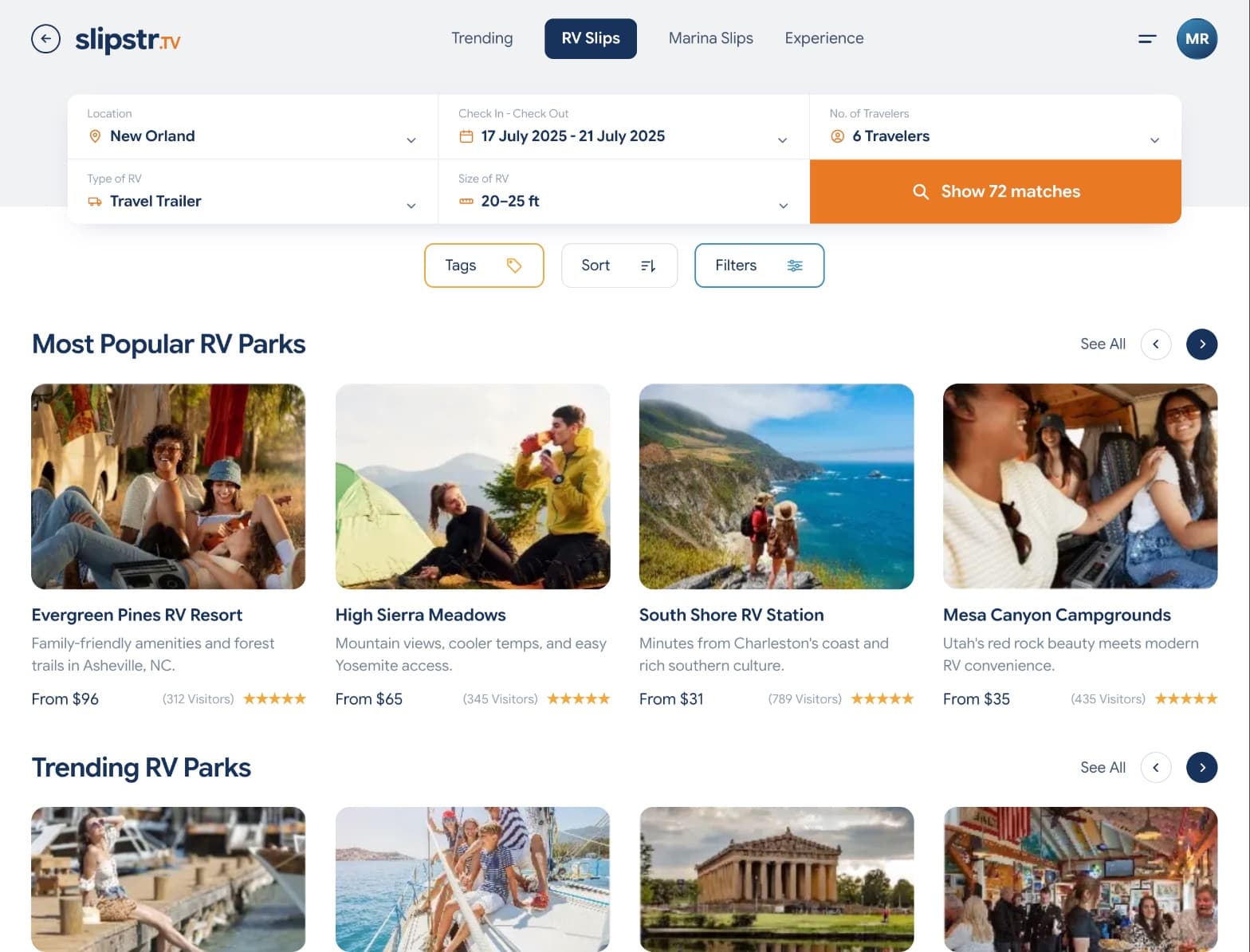
A months-long build with a 45-day window.
A fully functional MVP of this scale — Infrastructure as Code, a Node.js core API, a mobile app for iOS and Android, a consumer web app plus administration and vendor portals — would traditionally take months. Slipstr needed all of it live, secure and scalable, in six weeks.
AI-first engineering, not AI-assisted typing.
Open-source LLMs running locally on RTX 5090 rigs kept proprietary code private at zero latency. A custom RAG pipeline over the project scope, UI/UX designs and database schemas meant developers queried business rules instead of reading documentation. Architecture reasoning, boilerplate and test scaffolding were all delegated.
search, book, then travel.
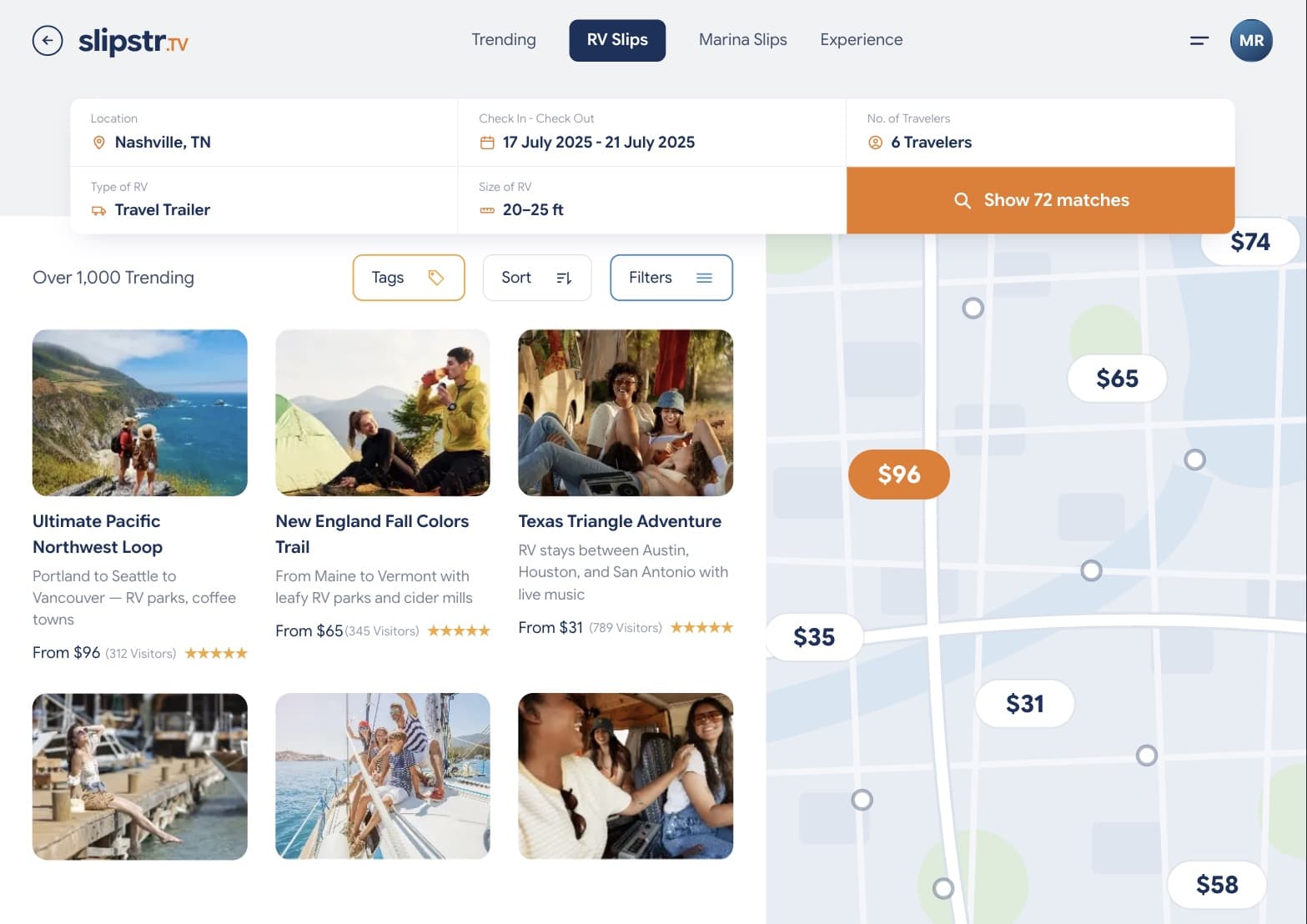
Sticky multi-parameter search — location, dates with flex windows, travellers, rig type and length — paired with live map results.
one codebase, three platforms.
React, Ionic and Capacitor deliver the same experience to web, iOS and Android — including a four-step search, live experience streams and collaborative itineraries.
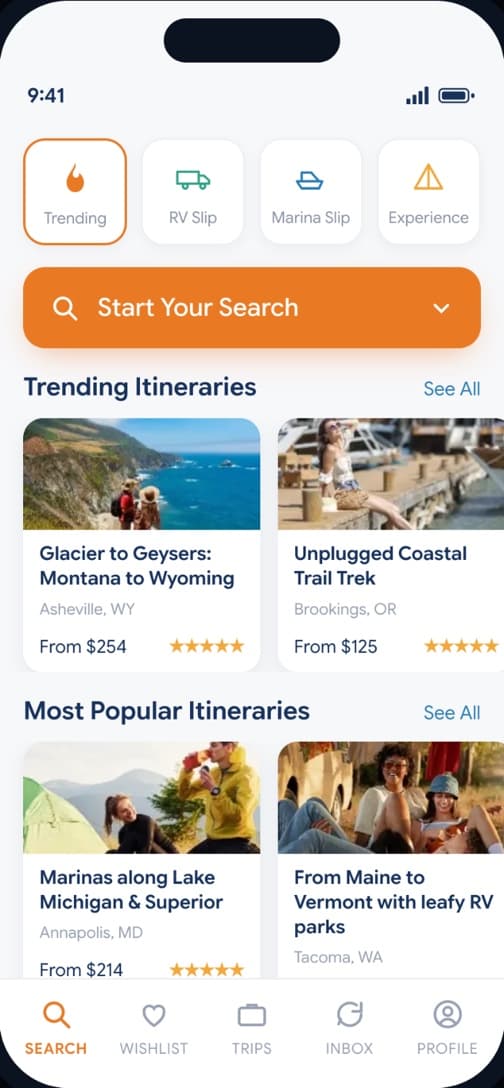
Trending feed
Four inventory modes — trending, RV slips, marina slips and experiences — behind one search field.
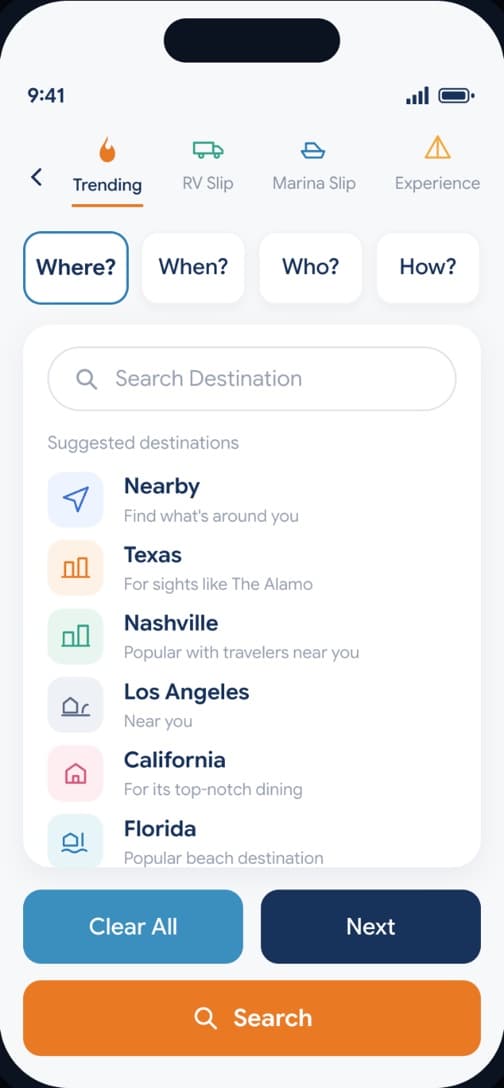
Where
Step one of four: nearby detection plus suggested regions, each with a reason to go.
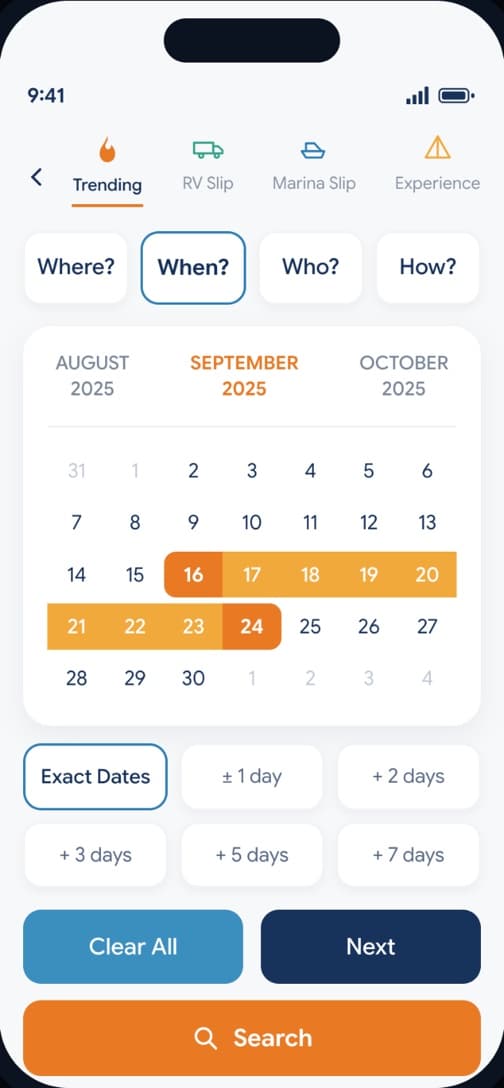
When
Range selection with flexibility windows up to ±7 days to widen thin availability.
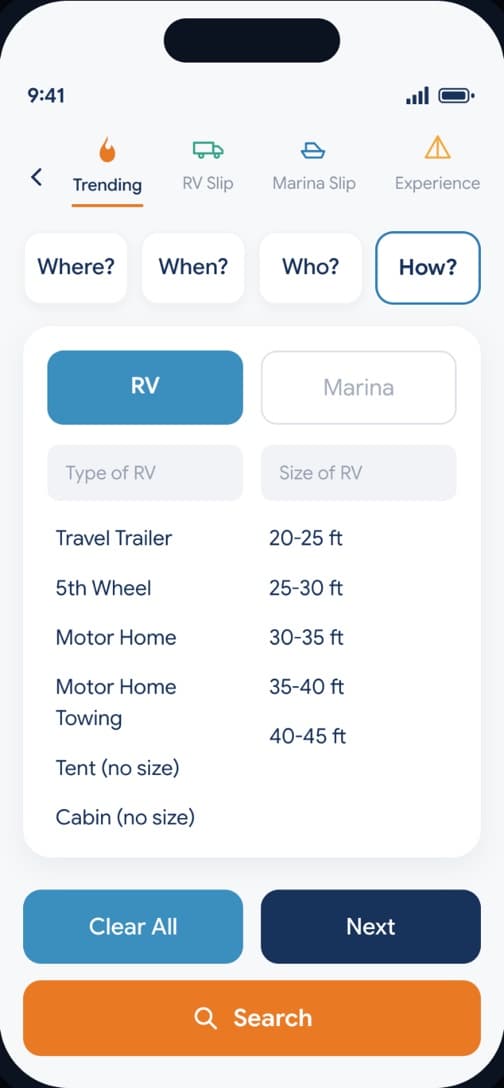
How
RV or marina, then type and length — the constraint that decides whether a slip physically fits.
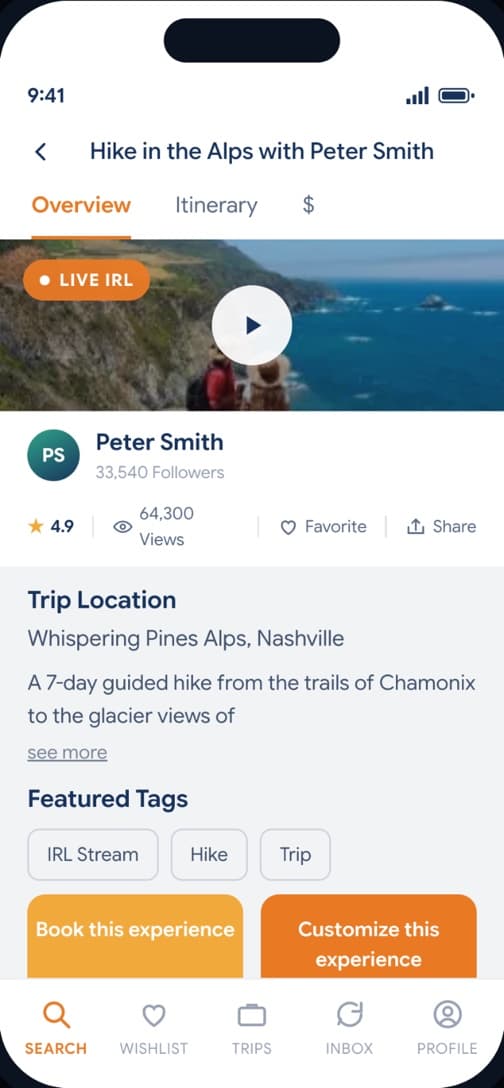
Hosted experience
Streamed and recorded trips from hosts, bookable as-is or customisable into your own trip.
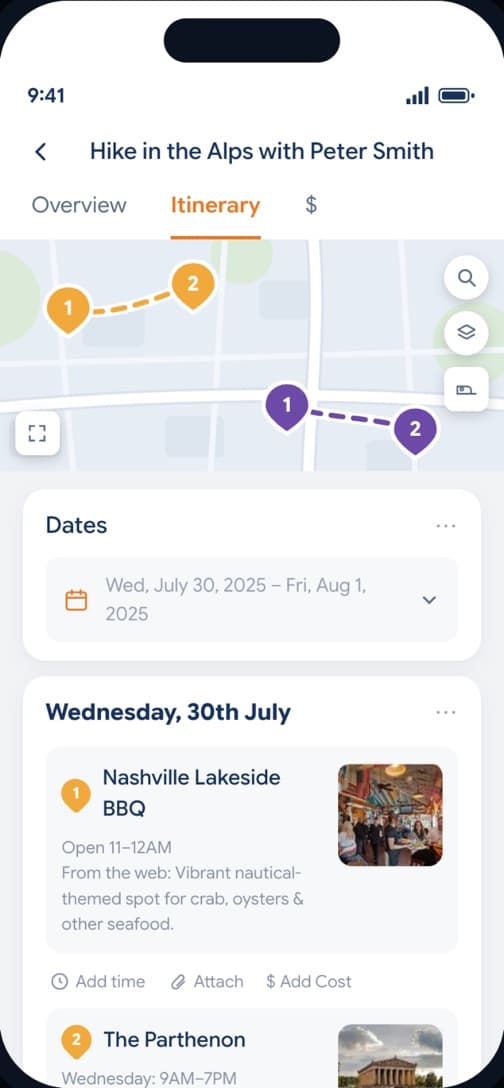
Itinerary builder
Day-by-day plans with mapped stops, web-enriched place data, times, attachments and costs.
infrastructure as code, shipped daily.
Cloud & IaC
Core API
Consumer apps
Portals & identity
three hard problems.
Paying two parties in one transaction.
Rather than escrowing funds and triggering a second transfer, a booking is processed once: payment routes straight to the vendor's Stripe Connected Account while Slipstr deducts commission as a platform fee. The double-fee structure disappears — and mobile checkout redirects to a secure browser session, keeping app-store commission out of the loop.
Documentation that can't go stale.
API docs were generated from the code itself. Composite NestJS decorators emit OpenAPI 3.0 schemas, query parameters and response codes as business logic is written, so web and mobile teams consumed an accurate /docs endpoint the moment a feature merged. No integration guesswork, no manual doc upkeep.
Moving fast without breaking it.
Jest and Supertest covered API services and end-to-end endpoints; Vitest unit-tested React components and Zustand logic; Cypress ran regression suites over the payment redirect and booking journeys. GitHub Actions enforced all of it before anything reached AWS — a zero-regression pipeline at sprint speed.
Two-week sprints, five-day acceptance windows.
The project was broken into structured two-week sprints shipping distinct modules — foundational setup, authentication, portals, then the booking workflow. Each module went to a UAT environment under strict user acceptance criteria, giving the client five days to test before the next one began. Merges to main deployed automatically to TestFlight, Play Console internal testing, Vercel, CloudFront and ECS.
a real marketplace, not a demo.
from scratch to a secure, scalable production marketplace across five deployment targets.
isolated UAT and production VPCs across three availability zones, with private-subnet compute and data.
regressions reached production — CI gates on every push, unit through E2E, so sprint velocity never cost stability.
let's build something
extraordinary.
Have a platform to build or scale? Let's turn your vision into a product that ships.
Start a Project